
Of all the facts about tinnitus, this one is the most clinically significant: approximately 90% of people with chronic tinnitus have some degree of measurable hearing loss. This is not coincidence. Hearing loss and tinnitus are mechanistically linked through a process that begins in the damaged cochlea and ends in the reorganized auditory cortex. Understanding this connection explains why tinnitus occurs, why it persists, and why restoring auditory input through hearing aids is one of the most effective tinnitus treatments available.
At the same time, the relationship is not absolute. About 10% of tinnitus patients have normal audiograms, and not every person with hearing loss develops tinnitus. The nuances matter, and this article explains all of them.
The 90% Statistic Explained
The 90% figure comes from multiple large epidemiological studies and clinical audiology databases. A comprehensive study by Henry et al. (2005) at the VA Portland Medical Center found that 90.2% of tinnitus patients had at least one abnormal audiometric threshold, even among patients who were unaware they had hearing loss. Shargorodsky et al. (2010) in a NHANES analysis of over 14,000 adults confirmed that hearing loss was the strongest independent predictor of tinnitus, with a dose-response relationship: the worse the hearing loss, the more likely tinnitus was present.
The most common pattern is high-frequency sensorineural hearing loss — the type caused by noise exposure and aging. This typically manifests as a "notch" or slope in the audiogram at 4,000–8,000 Hz, precisely the frequency range where most tinnitus is perceived. This correspondence between the frequency of hearing loss and the pitch of tinnitus is one of the strongest pieces of evidence for the mechanistic link between the two conditions.
How Cochlear Damage Creates Tinnitus
The cochlea contains approximately 15,000 outer hair cells (OHCs) and 3,500 inner hair cells (IHCs) at birth. These cells are the biological transducers that convert sound vibrations into electrical signals for the auditory nerve. Unlike cells in most other organs, cochlear hair cells do not regenerate in humans. Every hair cell lost to noise exposure, aging, medication, or infection is permanent.
When outer hair cells are damaged or destroyed, the corresponding frequency band loses its normal amplification and fine-tuning function. The inner hair cells at those frequencies receive less input, and the auditory nerve fibers connected to them transmit weaker signals to the brain. This reduced input is the hearing loss component.
The tinnitus component emerges from what happens next in the brain.
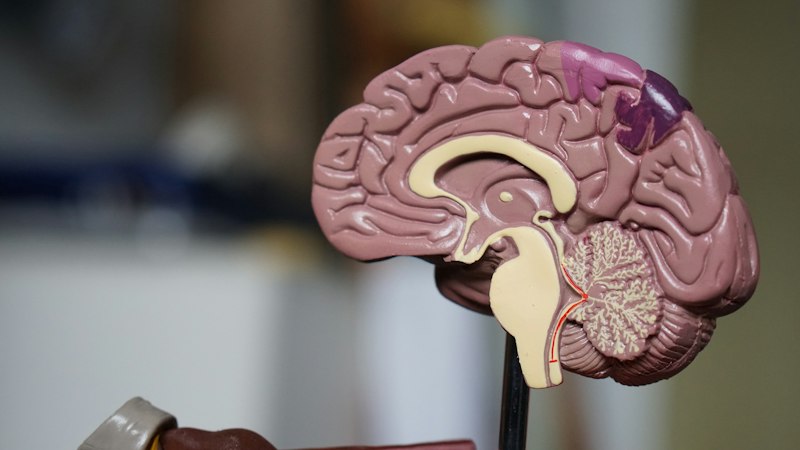
When the cochlea sends reduced input, the brain compensates by increasing neural gain — a process that can generate the phantom sound of tinnitus.
Understanding your tinnitus frequency is the first step. Lushh's Frequency Matcher helps you identify your exact tinnitus pitch for targeted notch therapy →
Central Gain Theory
The central gain theory is currently the most widely accepted explanation for how hearing loss produces tinnitus. It was formalized by Norena and Eggermont (2003) and has since been supported by extensive animal and human neuroimaging research.
The theory states that when the auditory cortex receives reduced input at certain frequencies (due to cochlear damage), it responds by increasing its own sensitivity — turning up the "neural volume." This is an adaptive mechanism: the brain is trying to compensate for the lost input by amplifying whatever signal remains. It is analogous to turning up the gain on a microphone when the speaker moves away — you get more volume, but also more noise.
In the case of tinnitus, the "noise" that gets amplified is spontaneous neural activity — the random firing of neurons that occurs in every neural system. In a healthy auditory system, this spontaneous activity is below the threshold of conscious perception. But when central gain is elevated, spontaneous firing is amplified to the point where the brain perceives it as sound. That perceived sound is tinnitus.
"The brain, deprived of its expected input, turns up the volume on everything — including silence. The result is tinnitus." — Adapted from Norena & Eggermont, 2003
This explains several key features of tinnitus:
- Tinnitus pitch matches hearing loss frequency. The brain increases gain most at frequencies where input is most reduced — which is why tinnitus pitch closely corresponds to the audiogram notch.
- Tinnitus in quiet environments. With no external sound to occupy the over-amplified neural circuits, spontaneous activity is most prominent in silence. This is why tinnitus is typically worst at night.
- Sound masking provides temporary relief. External sound provides real input that partially satisfies the over-amplified circuits, reducing the prominence of spontaneous activity. This is why background noise helps.
- Hearing aids reduce tinnitus. By restoring input at the damaged frequencies, hearing aids reduce the need for central gain, which in turn reduces the amplification of spontaneous activity.
Hidden Hearing Loss
One of the most important developments in audiology over the past decade is the discovery of cochlear synaptopathy, commonly called "hidden hearing loss." This condition, first described by Kujawa and Liberman at Harvard Medical School in 2009, involves damage to the synaptic connections between inner hair cells and auditory nerve fibers — even when the hair cells themselves are intact.
The critical implication for tinnitus is this: a patient can have significant cochlear damage that does not appear on a standard audiogram. The audiogram measures detection thresholds (the quietest sounds you can hear) in a silent room, which primarily depends on outer hair cell function. But real-world hearing — especially speech comprehension in noise — depends on the full complement of nerve fiber connections, many of which can be destroyed without changing detection thresholds.
Hidden hearing loss may explain a significant portion of the 10% of tinnitus patients who have "normal hearing." Their audiograms look fine, but the underlying synaptic damage has still triggered central gain changes that produce tinnitus. Research by Guest et al. (2017) in Ear and Hearing found evidence of reduced auditory nerve function (as measured by ABR wave I amplitude) in young adults with tinnitus and normal audiograms, supporting the cochlear synaptopathy hypothesis.
Implications for Diagnosis
Standard audiometry may be insufficient for understanding the full picture of auditory damage in tinnitus patients. Extended high-frequency audiometry (testing above 8 kHz, up to 16 kHz), auditory brainstem response (ABR) testing, and otoacoustic emissions (OAEs) can provide additional information about cochlear function that standard testing misses.
Match your tinnitus frequency in 60 seconds with Lushh's precision slider (100–16,000 Hz). Knowing your exact pitch enables targeted sound therapy.
Download Lushh — Free →Reading Your Audiogram
An audiogram is a graph showing your hearing thresholds at different frequencies. Understanding it helps you see the connection between your hearing loss pattern and your tinnitus:
- X-axis (horizontal): Frequency in Hertz (Hz), from low (250 Hz) to high (8,000 Hz). Left is low-pitched, right is high-pitched.
- Y-axis (vertical): Hearing level in decibels (dB HL). Top is soft (good hearing), bottom is loud (poor hearing).
- Normal hearing: 0–25 dB HL across all frequencies.
- Noise-induced pattern: A "noise notch" at 4,000 Hz — hearing dips sharply at 4 kHz, often with partial recovery at 8 kHz. This is the classic pattern from occupational or recreational noise exposure.
- Age-related pattern (presbycusis): Gradual sloping loss that worsens from low to high frequencies, most pronounced above 2,000 Hz.
Your tinnitus pitch will typically correspond to the frequency region where your audiogram shows the greatest decline. If you have a noise notch at 4 kHz, your tinnitus is likely perceived around 4 kHz. If you have a gradual high-frequency slope, your tinnitus may be perceived as a broad high-pitched hiss.

Audiometric testing reveals the pattern of hearing loss that often directly corresponds to tinnitus pitch and severity.
Hearing Aids as Tinnitus Treatment
Hearing aids are arguably the most evidence-based tinnitus treatment available for patients with concurrent hearing loss. The mechanism is straightforward: by amplifying environmental sounds at the frequencies where hearing is reduced, hearing aids restore the auditory input that was lost, reducing the central gain that produces tinnitus.
Research consistently supports this approach:
- A 2014 systematic review by Shekhawat et al. in the Journal of the American Academy of Audiology found that 60–70% of hearing aid users reported reduced tinnitus perception.
- Searchfield et al. (2010) demonstrated that hearing aids reduced tinnitus loudness ratings by an average of 12 dB — a substantial perceptual change.
- The American Academy of Otolaryngology-Head and Neck Surgery's 2014 Clinical Practice Guideline recommends hearing aids as a treatment option for patients with tinnitus and hearing loss.
Hearing Aids with Built-in Tinnitus Features
Modern hearing aids from manufacturers including Widex, Signia, Phonak, Oticon, and Starkey include integrated tinnitus sound therapy programs. These devices can simultaneously amplify environmental sounds (addressing hearing loss) and deliver a personalized tinnitus masking or sound therapy signal (addressing tinnitus directly). This dual-function approach is particularly effective because it addresses both components of the hearing loss-tinnitus relationship.
Some devices offer notch therapy features, fractal tones (Widex Zen), or white/pink noise generators that can be fine-tuned by an audiologist to match the patient's tinnitus characteristics.
OTC Hearing Aids in 2024–2026
The FDA's 2022 rule establishing the over-the-counter (OTC) hearing aid category has significantly expanded access to amplification for adults with mild-to-moderate hearing loss. For tinnitus patients, this is potentially transformative — many people who would benefit from hearing aids for tinnitus management had not pursued them due to cost ($2,000–$7,000 per pair for prescription devices) or perceived stigma.
OTC hearing aids from brands including Sony, Jabra, Lexie, and Eargo are available without a prescription at price points ranging from $200 to $1,000. While they lack the customization of prescription devices and typically do not include tinnitus-specific sound therapy programs, the basic amplification they provide can still reduce central gain and improve tinnitus for many users.
Important considerations for tinnitus patients considering OTC hearing aids:
- OTC devices are FDA-approved for mild-to-moderate hearing loss only. Severe hearing loss requires prescription fitting.
- A professional audiological evaluation is still recommended to understand your specific hearing loss pattern and rule out medical causes.
- OTC devices may not provide the frequency-specific amplification that best targets your tinnitus frequency. Prescription devices offer more precise adjustment.
- Combining OTC hearing aids with a dedicated sound therapy app like Lushh can provide the dual benefit of amplification plus tinnitus-specific therapy.
When Tinnitus Is Separate from Hearing Loss
In approximately 10% of cases, tinnitus occurs without any measurable hearing loss on standard audiometry. Possible explanations include:
- Hidden hearing loss (cochlear synaptopathy): Damage that does not appear on the standard audiogram but still triggers central gain changes.
- Somatosensory tinnitus: Caused by TMJ disorders, cervical spine problems, or other musculoskeletal conditions that send aberrant signals to the auditory brainstem.
- Medication-induced tinnitus: Certain medications (high-dose aspirin, loop diuretics, aminoglycoside antibiotics, some chemotherapy agents) can cause tinnitus without permanent hearing loss.
- Neurological conditions: Acoustic neuroma, multiple sclerosis, and other neurological conditions can produce tinnitus through central mechanisms unrelated to cochlear damage.
- Stress and anxiety-related tinnitus: The limbic system's influence on auditory processing can produce or amplify tinnitus perception even without peripheral hearing damage. See our article on the tinnitus-anxiety connection.
For these patients, treatment approaches differ from the hearing aid-focused strategy. Sound therapy, CBT, and addressing the specific underlying cause (TMJ treatment, medication adjustment, etc.) are the primary management tools.
Frequently Asked Questions
Does hearing loss always cause tinnitus?
No. While 90% of tinnitus patients have hearing loss, only 30-40% of people with hearing loss develop tinnitus. The likelihood increases with severity and specific damage pattern.
Can hearing aids reduce tinnitus?
Yes. 60-70% of hearing aid users report tinnitus improvement. By restoring auditory input, hearing aids reduce the central gain that generates tinnitus. Many modern hearing aids include built-in tinnitus sound therapy.
What is hidden hearing loss?
Hidden hearing loss (cochlear synaptopathy) is damage to nerve connections that does not appear on standard audiograms. It may explain tinnitus in patients with normal hearing thresholds who still struggle with speech in noise.
Can tinnitus occur without any hearing loss?
Yes, in about 10% of cases. Causes include TMJ disorders, medication side effects, neurological conditions, or somatosensory factors. Some may have hidden hearing loss undetectable by standard tests.
Start Targeted Tinnitus Therapy
Lushh's Frequency Matcher identifies your tinnitus pitch, then generates notch therapy sessions targeted to your exact frequency. Combined with 65+ therapeutic sounds and daily tracking, it is the perfect complement to hearing aids.
Download Lushh — FreeDisclaimer: This article is for informational purposes only and does not constitute medical advice. Always consult an audiologist or ENT specialist for hearing evaluations and tinnitus diagnosis. Do not self-diagnose hearing loss or adjust hearing aid settings without professional guidance.