
If you have tinnitus and anxiety, you already know something that neuroscience is only recently beginning to explain: these two conditions feed each other. The ringing triggers anxiety. The anxiety makes the ringing louder. And the louder it gets, the more anxious you become. This is not a metaphor. It is a measurable neurological feedback loop that involves some of the most primitive structures in the human brain.
A 2019 systematic review published in JAMA Otolaryngology-Head & Neck Surgery analyzed 28 studies involving over 8,000 tinnitus patients and found that anxiety disorders were present in 25-45% of tinnitus sufferers, compared to roughly 18% in the general population. But that statistic understates the problem. Subclinical anxiety -- the kind that doesn't meet diagnostic criteria but still degrades quality of life -- affects an estimated 60-70% of people with chronic tinnitus.
Understanding the neuroscience of this connection is not academic. It is the first step toward breaking it. Once you understand why your brain locks onto the tinnitus signal, you can use that knowledge to unlock it.
Why Tinnitus and Anxiety Are Neurologically Linked
Tinnitus is not an ear problem. It is a brain problem. While the initial trigger is usually cochlear damage -- from noise exposure, aging, ototoxic medications, or infection -- the persistent perception of sound happens in the central nervous system, not in the ear itself. The auditory cortex generates the phantom signal. But what determines whether that signal becomes distressing or ignorable depends on brain regions far removed from hearing.
The key insight from the past two decades of tinnitus research is that the same neural circuits that process tinnitus also process anxiety. Specifically, the limbic system (emotional processing), the autonomic nervous system (fight-or-flight activation), and the prefrontal cortex (attention and executive control) form a triangulated network that can either amplify tinnitus into a crisis or habituate it into background noise.
Jastreboff's neurophysiological model of tinnitus, first published in 1990 and since validated by functional neuroimaging studies, proposes that tinnitus distress arises not from the auditory signal itself, but from the emotional and autonomic reactions that the brain attaches to that signal. When those reactions include fear and anxiety, the brain's default mode becomes surveillance -- constantly monitoring for the sound and interpreting its presence as danger.
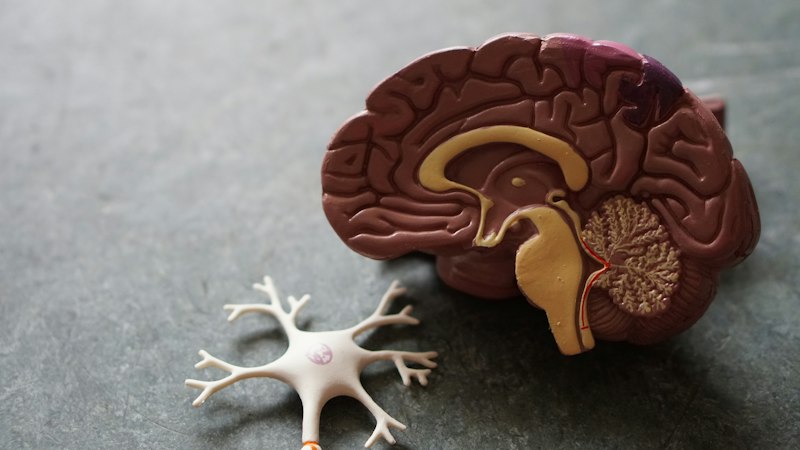
Functional neuroimaging reveals increased connectivity between the auditory cortex and amygdala in patients with tinnitus and comorbid anxiety.
The Amygdala: Your Brain's Threat Detector Gone Haywire
The amygdala is an almond-shaped structure deep in the medial temporal lobe. Its primary function is to evaluate incoming sensory information for potential threats and trigger appropriate defensive responses. When you hear a sudden loud noise, it is your amygdala that initiates the startle reflex before your conscious mind even registers what happened.
In chronic tinnitus, the amygdala becomes hyperactivated. A landmark fMRI study by Rauschecker et al. (2010), published in Neuron, demonstrated that patients with bothersome tinnitus showed significantly increased amygdala activity compared to both healthy controls and tinnitus patients who were not distressed by their condition. The critical finding was that the level of amygdala activation correlated with tinnitus distress, not tinnitus loudness.
This means that two people can have identical tinnitus signals -- the same frequency, the same perceived volume -- but the one whose amygdala tags the signal as "danger" will experience dramatically more suffering. The amygdala essentially applies an emotional label to the auditory signal, and once that label reads "threat," the entire brain reorganizes its processing priorities around monitoring that threat.
The consequences are profound:
- Sympathetic nervous system activation: Increased heart rate, muscle tension, shallow breathing, elevated cortisol
- Attentional capture: The tinnitus signal is moved from background processing to conscious foreground awareness
- Memory encoding: Negative experiences with tinnitus are preferentially stored, creating an increasingly negative narrative
- Sleep disruption: The amygdala remains vigilant even during sleep onset, preventing relaxation into deeper sleep stages
The most insidious aspect is that amygdala hyperactivation is self-reinforcing. Each anxiety episode strengthens the neural pathways between the auditory cortex and the amygdala through long-term potentiation. The more often the circuit fires, the easier it becomes to trigger, creating what neuroscientists call a maladaptive learning loop.
Attention Bias: The Spotlight You Can't Turn Off
Your brain processes an enormous amount of sensory information every second -- far more than conscious awareness can handle. The brain solves this problem through selective attention: a filtering system that determines which signals reach conscious awareness and which are suppressed. You don't consciously hear the hum of your refrigerator, the sound of traffic outside, or your own breathing because your brain has classified these as irrelevant and filtered them out.
Tinnitus should, in theory, be filtered the same way. It is a constant, unchanging signal with no informational value. The brain filters out constant signals automatically through a process called habituation. This is why most people with tinnitus eventually habituate -- they still have tinnitus, but their brain learns to ignore it.
Anxiety disrupts this habituation process by creating what cognitive psychologists call attentional bias toward threat. Research by Andersson et al. (2013) using dot-probe paradigms showed that tinnitus patients with high anxiety demonstrated significantly faster detection of tinnitus-related words compared to neutral words -- a classic attentional bias marker. Their brains were preferentially scanning for tinnitus-related information, even in visual tasks.
"The attentional system in tinnitus patients with comorbid anxiety operates like a spotlight that is permanently aimed at the auditory signal. The more you try to redirect it, the more powerfully it swings back." -- Searchfield et al., Trends in Hearing, 2017
This attentional bias creates a paradox: the harder you try not to hear your tinnitus, the louder it seems. This is not a failure of willpower. It is a fundamental property of how attention works. Attempting to suppress awareness of a stimulus (thought suppression) actually increases the frequency with which that stimulus enters consciousness -- a phenomenon well-documented by Wegner (1994) as the "ironic process theory." Applying this to tinnitus: every attempt to "not think about the ringing" sends an unconscious monitoring signal that keeps the ringing in focal awareness.
Lushh's CBT module teaches evidence-based attention retraining techniques specifically designed for tinnitus. Redirect the spotlight instead of fighting it.
Download Lushh -- Free →The HPA Axis and the Stress Hormone Loop
The hypothalamic-pituitary-adrenal (HPA) axis is your body's central stress response system. When the amygdala detects a threat, it signals the hypothalamus, which triggers the pituitary gland to release adrenocorticotropic hormone (ACTH), which stimulates the adrenal glands to produce cortisol. This cascade evolved to prepare your body for physical danger -- the fight-or-flight response.
In chronic tinnitus with anxiety, the HPA axis becomes chronically activated. Cortisol levels remain elevated not because of a single acute stressor, but because the brain perceives a continuous, inescapable threat (the tinnitus). A study by Hebert and Bhatt (2018) in the International Journal of Audiology measured salivary cortisol in tinnitus patients and found that those with high tinnitus distress had significantly flatter cortisol diurnal curves -- a pattern associated with chronic stress and HPA axis dysregulation.
The problem is that elevated cortisol has direct effects on auditory processing:
- Increased neural excitability: Cortisol enhances glutamate signaling in the auditory cortex, making neurons more likely to fire spontaneously -- literally amplifying the tinnitus signal at the neural level
- Reduced GABA activity: Cortisol suppresses the brain's primary inhibitory neurotransmitter, reducing the natural damping mechanisms that would otherwise quiet hyperactive auditory neurons
- Hippocampal volume reduction: Chronic cortisol exposure can shrink the hippocampus, which is involved in contextual memory and plays a role in determining whether a stimulus is "safe" or "dangerous"
- Prefrontal cortex impairment: Cortisol impairs prefrontal function, reducing your ability to consciously regulate attention and emotional responses -- the very skills needed to manage tinnitus
This creates a biochemical feedback loop: tinnitus triggers anxiety, anxiety elevates cortisol, cortisol amplifies tinnitus perception, louder tinnitus triggers more anxiety. Without intervention, this loop can escalate over months and years, which is why early treatment of tinnitus-related anxiety is so important.

The HPA axis stress response creates a biochemical loop where cortisol amplifies tinnitus perception at the neural level.
Anticipatory Anxiety: Dreading the Silence
One of the most debilitating aspects of tinnitus-related anxiety is anticipatory anxiety -- the fear of future tinnitus episodes or situations where tinnitus will be most noticeable. This often manifests as a dread of silence. People with tinnitus-related anxiety begin to fear quiet rooms, bedtime, meditation, or any situation where external sound is reduced and their tinnitus becomes more prominent.
Anticipatory anxiety is particularly destructive because it extends the suffering far beyond the actual experience of hearing tinnitus. A person might spend an entire day dreading bedtime, producing continuous low-grade anxiety and elevated cortisol for hours before the feared situation even occurs. By the time they actually lie down in a quiet room, their nervous system is already in a heightened state, making the tinnitus perception maximally intrusive.
This pattern often leads to avoidance behaviors:
- Keeping the television or radio on constantly, even when not watching or listening
- Avoiding quiet social situations (libraries, restaurants during quiet hours, churches)
- Sleeping with headphones or earbuds at high volume
- Refusing to participate in mindfulness or meditation practices
- Avoiding audiologist appointments for fear of bad news
While these behaviors provide short-term relief, they reinforce the brain's classification of tinnitus as a threat. Avoidance communicates to the amygdala: "This is something worth avoiding -- therefore it is dangerous." Each avoidance behavior strengthens the threat association and makes habituation less likely.
CBT for Tinnitus: What the Research Shows
Cognitive Behavioral Therapy (CBT) is currently the only treatment for tinnitus that has Level 1 evidence (multiple high-quality randomized controlled trials) for reducing tinnitus distress. A 2019 Cochrane review by Fuller et al. analyzed 28 RCTs with 2,733 participants and concluded that CBT significantly reduced tinnitus distress, with moderate to large effect sizes that were maintained at 6- and 12-month follow-up.
CBT for tinnitus does not attempt to eliminate the tinnitus signal. Instead, it targets the psychological and behavioral responses that transform a neutral auditory signal into a source of suffering. The core components include:
Cognitive Restructuring
Identifying and challenging catastrophic thoughts about tinnitus. Common cognitive distortions include "This will never get better," "I'll never be able to sleep again," "My hearing is being destroyed," and "I can't function with this noise." These thoughts, while understandable, are not accurate and directly fuel the anxiety-tinnitus cycle. Cognitive restructuring replaces them with evidence-based alternatives without minimizing the real difficulty of living with tinnitus.
Behavioral Activation
Gradually re-engaging with activities and environments that have been avoided due to tinnitus. This includes structured exposure to quiet environments (starting with brief periods and gradually extending), which teaches the brain that silence is not dangerous and that tinnitus in silence, while noticeable, is survivable.
Attention Training
Learning to deliberately shift attention away from tinnitus without using suppression (which backfires). Techniques include focused sensory engagement (deliberately attending to other senses), external auditory focus (listening for specific environmental sounds), and mindfulness-based attention regulation.
Relaxation Training
Progressive muscle relaxation, breathing exercises, and guided imagery to directly counter the physiological arousal component of the anxiety-tinnitus cycle. Reducing sympathetic nervous system activation lowers cortisol and reduces the neural excitability that amplifies tinnitus perception.
The JAMA systematic review found that CBT reduced Tinnitus Handicap Inventory scores by an average of 10-15 points (clinically significant improvement) and anxiety scores by 40-60%. Importantly, these improvements occurred without any change in the actual loudness of the tinnitus signal. The tinnitus was still there -- but the brain's reaction to it had fundamentally changed. Try Lushh's CBT program free for 7 days →
Medication Considerations
There is currently no FDA-approved medication for tinnitus. However, because anxiety is a major driver of tinnitus distress, medications that reduce anxiety can indirectly improve tinnitus outcomes. It is important to understand what medications can and cannot do in this context.
SSRIs and SNRIs
Selective serotonin reuptake inhibitors (SSRIs like sertraline, escitalopram) and serotonin-norepinephrine reuptake inhibitors (SNRIs like venlafaxine, duloxetine) are the most commonly prescribed medications for tinnitus-related anxiety and depression. A 2017 meta-analysis in Frontiers in Neurology found modest but statistically significant reductions in tinnitus distress scores in patients treated with SSRIs compared to placebo. The effect was most pronounced in patients with comorbid depression or anxiety disorders.
Important caveats: SSRIs take 4-6 weeks to reach full effect. Some patients report temporary tinnitus worsening during the first 2-3 weeks of treatment. In rare cases, SSRIs can cause tinnitus as a side effect, so close monitoring is essential during initiation.
Benzodiazepines
Drugs like clonazepam and alprazolam can provide rapid anxiety relief and some patients report tinnitus reduction. However, benzodiazepines carry significant risks: tolerance (requiring increasing doses), physical dependence, withdrawal symptoms that can include tinnitus worsening, and cognitive impairment. Most clinical guidelines recommend against long-term benzodiazepine use for tinnitus. They may be appropriate for short-term crisis management under close medical supervision.
Other Medications
Gabapentin and pregabalin (GABAergic anticonvulsants) have shown mixed results. Melatonin has some evidence for tinnitus-related sleep disturbance. Nortriptyline, a tricyclic antidepressant, showed benefit in a small RCT but with significant side effect burden. None of these are first-line treatments, and all require careful discussion with a prescribing physician.
The clinical consensus is clear: medication should complement, not replace, behavioral and cognitive interventions. CBT plus medication outperforms either alone for patients with significant tinnitus-related anxiety.
Breaking the Cycle: A Practical Framework
Understanding the neuroscience gives you a map. Here is a practical framework for using that map to navigate out of the tinnitus-anxiety cycle:
1. Reduce Physiological Arousal First
When anxiety is acute, cognitive strategies are difficult to access because the prefrontal cortex is functionally impaired by stress hormones. Start with the body: deep breathing exercises (4-7-8 or box breathing), progressive muscle relaxation, or cold water on the face (triggers the mammalian dive reflex, which rapidly reduces heart rate). The goal is to move out of fight-or-flight before attempting any cognitive work.
2. Use Sound Enrichment Strategically
Sound enrichment is not the same as masking. The goal is not to drown out tinnitus but to reduce the contrast between the tinnitus signal and the acoustic environment. Lower the prominence of tinnitus just enough that the amygdala's threat response de-escalates. Nature sounds, pink noise, and specially designed soundscapes at a volume slightly below your tinnitus are ideal. This allows habituation to proceed while reducing distress.
3. Challenge Catastrophic Thoughts
When you notice tinnitus and feel anxiety rising, identify the thought driving the emotion. Common patterns: "It's getting worse" (catastrophizing), "I'll never be able to enjoy quiet again" (fortune-telling), "Other people couldn't handle this" (mind-reading). For each thought, ask: Is this a fact or an interpretation? What would I tell a friend who said this? What is the actual evidence?
4. Practice Graduated Exposure to Silence
Avoidance of quiet environments maintains and strengthens the fear response. Create a structured plan to gradually increase your tolerance for silence: start with 2 minutes of sitting in a quiet room while practicing relaxation techniques, then increase by 1-2 minutes every few days. Track your anxiety level on a 0-10 scale. Over time, you will observe the anxiety diminishing as your brain learns that silence is not dangerous.
Lushh combines CBT exercises, sound therapy, and daily tracking to help you break the tinnitus-anxiety cycle systematically.
Start Your Free Trial →5. Monitor and Track
Anxiety distorts perception. When you're anxious, tinnitus feels like it's always at its worst. Objective daily tracking -- rating tinnitus loudness, distress, and anxiety on numeric scales -- provides a reality check. Most people who track find that their tinnitus fluctuates far more than they realized, with many "good" periods they were overlooking due to negativity bias. Lushh's daily tracker makes this effortless and generates PDF reports you can share with your healthcare provider.
6. Address Sleep
Sleep deprivation dramatically worsens both anxiety and tinnitus perception. It is often the single highest-leverage intervention. Prioritize sleep hygiene: consistent bed and wake times, cool and dark bedroom, no screens for one hour before bed, and gentle sound enrichment (not masking) during the night. For persistent sleep difficulties, CBT for insomnia (CBT-I) is more effective than sleep medication and specifically addresses the tinnitus-sleep interaction.
Frequently Asked Questions
Can anxiety actually cause tinnitus?
Anxiety does not directly cause tinnitus in the way noise exposure damages hair cells. However, anxiety amplifies the brain's perception of tinnitus through central gain mechanisms. The amygdala tags the tinnitus signal as threatening, which increases neural activity in the auditory cortex and makes tinnitus louder and more intrusive. In some cases, people with severe anxiety develop tinnitus perception even without measurable hearing loss.
Does treating anxiety reduce tinnitus?
Yes, in many cases. A 2019 JAMA Otolaryngology systematic review found that CBT reduced tinnitus distress scores by 40-60% in most participants, even though the tinnitus signal itself remained. When anxiety decreases, the brain's threat response to tinnitus weakens, often making the sound subjectively quieter and less intrusive.
What is the best medication for tinnitus anxiety?
There is no FDA-approved medication specifically for tinnitus. SSRIs and SNRIs are sometimes prescribed off-label to address the anxiety and depression that accompany tinnitus. Benzodiazepines may provide short-term relief but carry dependency risks and are not recommended for long-term use. CBT remains the first-line treatment recommended by most clinical guidelines.
Why is my tinnitus worse when I'm anxious?
Anxiety activates the sympathetic nervous system (fight-or-flight), which increases cortisol and norepinephrine levels. These stress hormones increase neural excitability in the auditory cortex, literally amplifying the tinnitus signal. Additionally, anxiety creates attentional bias -- your brain preferentially monitors threats, and if tinnitus is classified as a threat, you become hyperaware of it.
Break the Tinnitus-Anxiety Cycle with Lushh
Lushh combines CBT exercises, sound therapy, guided breathing, and daily tracking in one app. Evidence-based tools to help your brain reclassify tinnitus from threat to background noise.
Download Lushh -- FreeDisclaimer: This article is for informational purposes only and does not constitute medical advice. If you are experiencing severe anxiety, depression, or suicidal thoughts related to tinnitus, please contact your healthcare provider or a crisis helpline immediately. Always consult your healthcare provider for diagnosis and treatment of tinnitus or any medical condition.