
You went to a concert last night. The music was incredible. But now, lying in bed or sitting in a quiet room, you notice it: a high-pitched ringing, buzzing, or hissing in your ears that was not there before. It might be in one ear or both. It might be faint or alarmingly loud. You are not imagining it, and you are not alone -- an estimated 92% of concert-goers experience temporary tinnitus after attending a loud event, according to a study published in Noise & Health by Beach et al. (2013).
The good news: in the majority of cases, concert-induced tinnitus is temporary and will resolve within 24 to 72 hours. The less good news: each episode of temporary tinnitus is a warning sign of acoustic injury, and repeated episodes can lead to permanent tinnitus. What you do in the next 48 hours matters for your long-term hearing health.
What Just Happened to Your Ears
When you are exposed to loud sound, the hair cells in your cochlea (inner ear) are physically stressed. These are microscopic, delicate structures that convert sound waves into electrical signals for your auditory nerve. At normal listening levels, they flex gently with each sound wave. At concert levels (typically 100-120 dB), they are bent to their structural limits.
This over-stimulation produces a condition called temporary threshold shift (TTS). Your hearing thresholds temporarily increase -- meaning you need louder sounds to hear the same things. The "muffled" or "underwater" feeling many people experience after a concert is TTS. The hair cells are not destroyed, but they are metabolically exhausted and temporarily non-functional.
The tinnitus you hear is a byproduct of this process. When the hair cells at certain frequencies stop functioning (or function poorly), the corresponding neurons in your auditory cortex lose their normal input. In response, they become hyperactive and begin firing spontaneously. Your brain interprets this spontaneous firing as sound -- and that is the ringing you hear.
In most cases, the hair cells recover within 24-72 hours as they restore their metabolic balance. When they resume normal function, the spontaneous neural firing stops, and the tinnitus resolves. However -- and this is the critical point -- each episode of TTS likely causes some permanent subclinical damage, even when hearing appears to fully recover on an audiogram.
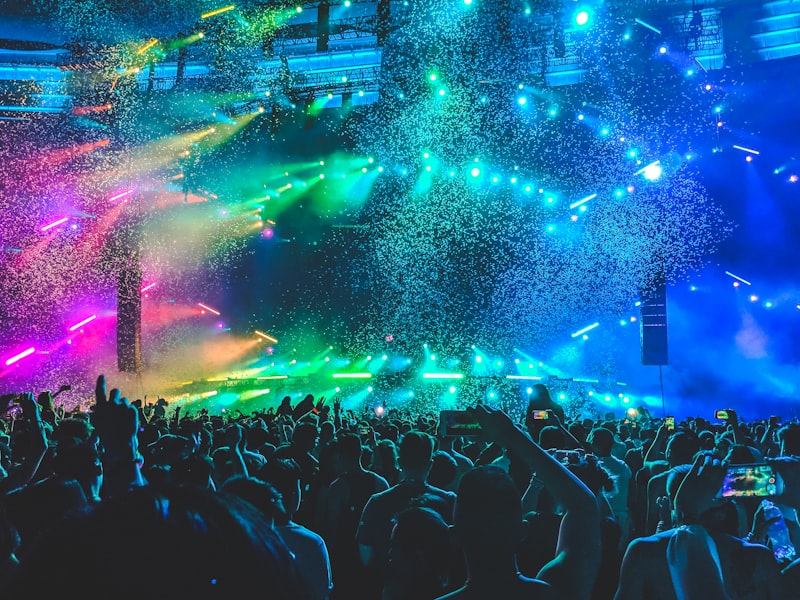
A typical concert exposes attendees to 100-120 dB for 2-3 hours -- far exceeding the safe exposure threshold of 85 dB for just 15 minutes at those levels.
The First-Aid Protocol: 0-48 Hours
Here is what to do immediately and in the days following a loud concert:
Hour 0-4: Immediate Actions
- Remove yourself from the noise source. If you are still at the venue and notice tinnitus starting, leave or move to a quieter area immediately. Every additional minute of exposure adds to the damage.
- Do not expose your ears to any additional loud sound. Do not put headphones on. Do not go to another loud venue. Do not blast music in the car.
- Resist the urge to "test" your hearing. Playing tones or loud music to check whether you can still hear properly adds further stress to already-damaged hair cells.
- Use gentle sound enrichment. If the tinnitus is distressing, play quiet nature sounds or pink noise at a low volume to reduce the contrast. Do not mask aggressively -- just enough to take the edge off.
Hours 4-24: Recovery Period
- Stay in a quiet environment. Your goal for the next 24 hours is to keep all sound exposure below 75 dB. This allows hair cells to begin metabolic recovery without additional stress.
- Prioritize sleep. Sleep is when your body performs most of its cellular repair. If tinnitus is making sleep difficult, use gentle sound enrichment at low volume.
- Stay hydrated. The cochlea has its own blood supply and is metabolically active. Adequate hydration supports the vascular supply to the inner ear.
- Manage anxiety. It is normal to feel anxious about the tinnitus, especially if this is your first episode. Breathing exercises can help reduce the anxiety response that amplifies tinnitus perception. Remember: most concert-induced tinnitus resolves within days.
- Do not search catastrophic tinnitus stories online at 2 AM. Internet forums are populated by the most severe cases. They are not representative of typical outcomes from a single concert exposure.
Lushh provides gentle sound enrichment, breathing exercises, and tracking tools specifically designed for tinnitus management -- including post-exposure recovery.
Download Lushh -- Free →Hours 24-48: Monitoring
- Notice whether the tinnitus is improving. Most people will notice a reduction in tinnitus loudness within 24-48 hours. Even small improvements are a good sign.
- Continue avoiding loud sound. Your hair cells are still recovering. Give them another 24-48 hours before returning to normal sound exposure.
- Start tracking. If you are not already tracking your tinnitus, now is a good time to start. Rate the loudness and distress on a 0-10 scale twice daily. This gives you objective data on the recovery trajectory.
Temporary vs. Permanent: The 2-Week Threshold
The clinically significant timeline is 2 weeks. Most otolaryngologists and audiologists consider this the point at which temporary tinnitus transitions to a potentially chronic condition.
The timeline works like this:
- 24-72 hours: Most TTS-related tinnitus resolves. Hair cells recover metabolic function, spontaneous neural firing decreases.
- 3-7 days: If tinnitus persists but is clearly improving (getting quieter, less frequent, or less noticeable), continued recovery is likely.
- 1-2 weeks: The window in which most recoverable damage completes its resolution. If tinnitus is stable or worsening at this point, it may indicate permanent hair cell damage or neural reorganization.
- Beyond 2 weeks: Tinnitus persisting beyond 2 weeks is more likely to be chronic. This does not mean it will be permanent at its current severity -- habituation typically occurs over 6-18 months -- but it is unlikely to disappear completely and warrants professional evaluation.
If your tinnitus has not improved after one week, or is present at the same intensity after two weeks, schedule an appointment with an audiologist. Early intervention improves outcomes.
Hidden Hearing Damage: Why Normal Audiograms Lie
Here is something that audiological research has revealed in the past decade that changes everything about how we think about concert hearing damage: your audiogram can look perfectly normal while you have significant hidden hearing loss.
Research by Kujawa and Liberman (2009) at Harvard/Massachusetts Eye and Ear demonstrated in animal models that noise exposure can permanently destroy the synaptic connections between hair cells and auditory nerve fibers -- even when the hair cells themselves recover. This condition is called cochlear synaptopathy or "hidden hearing loss" because it does not appear on standard audiograms (which only test threshold sensitivity).
The practical consequence: you can go to a concert, experience TTS and temporary tinnitus, have your hearing "return to normal" on an audiogram 72 hours later, and still have lost 30-50% of the neural connections at the frequencies that were most stressed. This synaptic damage accumulates with each exposure. Over years of repeated concert attendance without protection, the cumulative synaptic loss can eventually become severe enough to manifest as difficulty understanding speech in noisy environments -- even while your audiogram remains "normal."
This finding underscores why prevention is so much more important than treatment. Once synaptic connections are lost, they do not regenerate (at least not with current technology). Every concert without ear protection is a gamble with connections you cannot get back.

Standard audiograms test threshold sensitivity but cannot detect hidden hearing loss (cochlear synaptopathy) caused by repeated noise exposure.
When to See a Doctor
Seek medical attention if you experience any of the following after a concert:
- Sudden complete hearing loss in one or both ears -- this may indicate perilymphatic fistula or sudden sensorineural hearing loss, both of which are medical emergencies
- Severe pain in the ear -- may indicate acoustic trauma to the tympanic membrane
- Dizziness or vertigo -- may indicate damage to the vestibular system
- Bleeding from the ear -- may indicate tympanic membrane perforation
- Tinnitus persisting without improvement beyond 2 weeks
- Tinnitus that is getting progressively louder rather than improving
- Tinnitus in only one ear (unilateral tinnitus warrants evaluation to rule out acoustic neuroma or other pathology)
Prevention for Next Time
If you attend concerts regularly, a hearing conservation strategy is not optional -- it is the only thing standing between you and the same condition that affects 59% of music industry workers.
Earplugs: Non-Negotiable
Musician-grade earplugs with flat attenuation reduce volume by 15-25 dB while preserving music quality. The Etymotic ER20XS ($15-20) is the minimum acceptable option for concert-goers. Custom-molded earplugs ($150-300) are worth the investment for regular attendees. At 105 dB, earplugs reducing sound by 20 dB bring exposure to 85 dB -- within safe limits for a 2-3 hour concert.
Positioning
Sound intensity follows the inverse square law: doubling your distance from a speaker reduces SPL by approximately 6 dB. Standing 20 meters from the main PA instead of 5 meters reduces your exposure by 12 dB. Avoid standing directly in front of speakers or subwoofers.
Breaks
Step out of the venue for 10-15 minutes every 45-60 minutes. This gives your hair cells a recovery window and reduces cumulative dose. Many people report that their concert experience actually improves with breaks -- you notice more detail in the music because your ears are less fatigued.
Post-Concert Recovery
Allow 16-24 hours of quiet (below 75 dB) after every concert. Avoid headphone use during this period. Use Lushh's sound therapy for gentle recovery →
Frequently Asked Questions
How long does tinnitus last after a concert?
In most cases, tinnitus from a single concert exposure resolves within 24-72 hours. If it persists beyond 2 weeks, it may indicate permanent damage and you should see an audiologist. The 2-week mark is clinically significant because most TTS-related tinnitus resolves within this window.
Should I go to the ER for tinnitus after a concert?
If you experience only tinnitus and mild muffling, an ER visit is generally not necessary. However, seek immediate medical attention if you experience sudden total hearing loss, severe ear pain, dizziness or vertigo, or bleeding from the ear.
Will my hearing come back after a loud concert?
Temporary threshold shift typically resolves within 24-72 hours. However, even when hearing thresholds return to normal, there may be hidden hearing damage (cochlear synaptopathy) that standard audiograms do not detect. Each exposure likely causes some permanent synaptic damage.
How loud is a typical concert?
Typical concerts range from 95-120 dB. Rock and EDM concerts are the loudest (100-120 dB). At 100 dB, safe exposure is only 15 minutes. A 2-hour concert at 105 dB delivers the maximum daily noise dose in just 15 minutes.
Recover Faster with Lushh
Lushh provides gentle sound enrichment for post-concert recovery, breathing exercises for anxiety, frequency matching to track your tinnitus, and daily logs to monitor your recovery timeline.
Download Lushh -- FreeDisclaimer: This article is for informational purposes only and does not constitute medical advice. If you experience sudden hearing loss, severe pain, vertigo, or bleeding from the ear after noise exposure, seek immediate medical attention. Always consult your healthcare provider for diagnosis and treatment.