
Your breath is the fastest tool you have to change your nervous system state. Within 60 seconds of starting a controlled breathing exercise, measurable changes occur: heart rate decreases, blood pressure drops, cortisol production slows, and the balance between your sympathetic (fight-or-flight) and parasympathetic (rest-and-digest) nervous systems shifts. For tinnitus sufferers, this shift is not a luxury -- it is a necessity.
Tinnitus distress is driven by sympathetic nervous system activation. When your brain classifies tinnitus as a threat, the anxiety response elevates cortisol and norepinephrine, which increase neural excitability in the auditory cortex and literally amplify the tinnitus signal. Breathing exercises reverse this cascade by activating the parasympathetic nervous system through vagus nerve stimulation -- and they do it faster than any medication.
The Vagus Nerve: Your Built-In Volume Knob
The vagus nerve is the longest cranial nerve in your body, running from your brainstem to your abdomen. It is the primary communication highway of the parasympathetic nervous system. When vagal tone is high (meaning the vagus nerve is highly active), your body is in a state of calm alertness: heart rate is low and variable, digestion is active, inflammation is reduced, and -- critically for tinnitus -- neural excitability in the central auditory pathway is dampened.
Breathing is the most accessible and immediate way to stimulate the vagus nerve. The mechanism is direct: during exhalation, the diaphragm moves upward and compresses the lungs, which stimulates stretch receptors in the lung tissue. These receptors send signals via the vagus nerve to the nucleus tractus solitarius in the brainstem, which triggers parasympathetic activation. This is why the exhalation phase is the most important part of any breathing exercise for tinnitus -- it is during the exhale that vagal stimulation occurs.
The relationship between vagal tone and tinnitus has been directly studied. Research by Lehtimaki et al. (2013) demonstrated that transcutaneous vagus nerve stimulation reduced tinnitus loudness and distress in a controlled trial. While electrical VNS requires a device, respiratory vagus nerve stimulation achieves the same effect through slower, deeper breathing -- particularly extended exhalations.
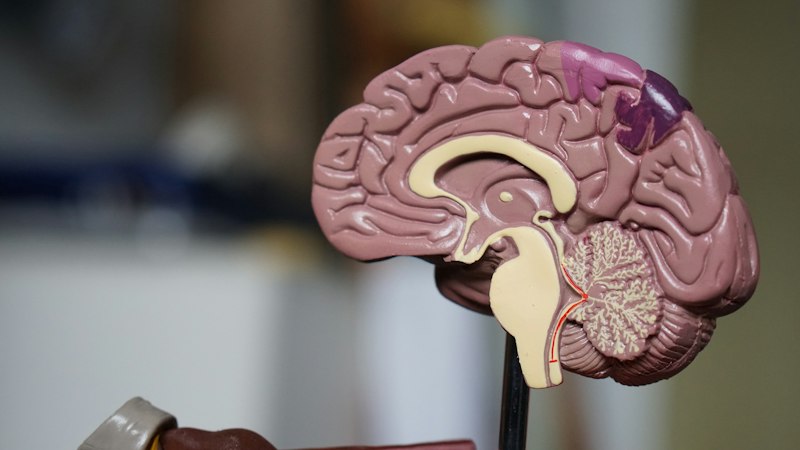
The vagus nerve connects your brainstem to your major organs. Extended exhalation activates this pathway, shifting your nervous system toward calm.
Technique 1: The 4-7-8 Breath
Best for: Bedtime tinnitus, sleep onset difficulty, acute anxiety episodes
Developed by Dr. Andrew Weil and based on pranayama yoga practices, the 4-7-8 technique is particularly effective for tinnitus because of its extended exhale phase, which maximizes vagal stimulation.
Instructions:
- Place the tip of your tongue against the ridge of tissue behind your upper front teeth. Keep it there throughout the exercise.
- Inhale quietly through your nose for a count of 4 seconds.
- Hold your breath for a count of 7 seconds. During the hold, focus on the stillness and notice your body relaxing.
- Exhale completely through your mouth, making a whooshing sound, for a count of 8 seconds.
- This completes one cycle. Repeat for 4 cycles total (approximately 80 seconds).
The 4-7-8 ratio means your exhale is twice as long as your inhale, producing strong parasympathetic activation. The 7-second breath hold creates a brief period of CO2 accumulation, which has a mild vasodilatory effect and helps reset the breathing pattern. Most people find that tinnitus subjectively decreases during the exhale phase, when vagal activation is highest.
Tip: If the counts feel too long initially, scale proportionally (2-3.5-4 seconds). The ratio matters more than the absolute count.
Technique 2: Box Breathing (Navy SEAL Method)
Best for: Daytime tinnitus management, maintaining calm during stressful situations, before challenging acoustic environments
Box breathing is used by Navy SEALs, first responders, and elite athletes to maintain composure under extreme stress. Its equal-phase structure makes it particularly useful for tinnitus sufferers who need to maintain functional calm during daily activities.
Instructions:
- Inhale slowly through your nose for 4 seconds, expanding your abdomen.
- Hold at the top of the inhale for 4 seconds.
- Exhale slowly through your nose or mouth for 4 seconds.
- Hold at the bottom of the exhale for 4 seconds.
- Repeat for 4-8 cycles (approximately 2-4 minutes).
Box breathing's equal phases (4-4-4-4) make it easy to maintain rhythm without counting errors. The two hold phases -- at full lungs and empty lungs -- create a structured pause that interrupts the racing thought patterns common in tinnitus anxiety. Many practitioners report that the post-exhale hold is particularly powerful for tinnitus, as the moment of stillness with empty lungs provides a brief window where tinnitus awareness naturally shifts.
Lushh includes guided breathing exercises with visual pacing indicators, designed specifically for tinnitus management. Practice with therapeutic background sounds.
Download Lushh -- Free →Technique 3: The Physiological Sigh
Best for: Fastest possible relief during acute tinnitus spikes, panic moments, immediate nervous system reset
Discovered in the 1930s but recently popularized by Stanford neuroscientist Andrew Huberman, the physiological sigh is the fastest known breathing pattern for activating the parasympathetic nervous system. It produces measurable stress reduction in a single breath cycle.
Instructions:
- Take a deep inhale through your nose.
- Immediately take a second, shorter inhale through your nose on top of the first (topping off your lungs).
- Take a long, slow exhale through your mouth until your lungs are completely empty.
- One cycle is usually sufficient. Repeat 2-3 times if needed.
The double inhale reinflates collapsed alveoli in the lungs (tiny air sacs), which maximizes the surface area available for CO2 offloading during the subsequent long exhale. This produces a rapid decrease in blood CO2, which triggers a strong vagal response. The effect is almost immediate -- most people feel calmer within 15-30 seconds of a single physiological sigh.
This technique is especially valuable for tinnitus because it works in situations where longer exercises are impractical: during a work meeting, in public, while driving, or during a tinnitus spike that triggers panic.
Technique 4: Coherent Breathing (5.5 BPM)
Best for: Long-term HRV optimization, daily practice, building resilience against tinnitus distress
Coherent breathing targets a specific respiratory rate of approximately 5.5 breaths per minute (about 5.5 seconds inhale, 5.5 seconds exhale). This rate has been identified through research by Lehrer et al. (2003) and others as the frequency that maximizes heart rate variability (HRV) -- a key biomarker of autonomic nervous system flexibility and resilience.
Instructions:
- Inhale gently through your nose for approximately 5.5 seconds.
- Exhale gently through your nose for approximately 5.5 seconds.
- No breath holds. Smooth, continuous rhythm.
- Continue for 10-20 minutes.
At 5.5 BPM, your respiratory cycle synchronizes with your baroreceptor reflex cycle, creating a phenomenon called resonance frequency breathing. During resonance, the oscillations of heart rate, blood pressure, and respiratory sinus arrhythmia all align, producing maximum HRV amplitude. High HRV is associated with better emotional regulation, lower anxiety, improved sleep quality, and -- directly relevant to tinnitus -- greater capacity for the prefrontal cortex to downregulate amygdala reactivity.

Coherent breathing at 5.5 breaths per minute optimizes heart rate variability -- a biomarker of autonomic resilience.
Technique 5: Diaphragmatic Breathing
Best for: Foundation technique, correcting chronic chest breathing, general relaxation
Many tinnitus patients develop chronic chest breathing -- shallow, rapid breaths that engage the accessory breathing muscles (neck, shoulders, chest) rather than the diaphragm. This breathing pattern sustains low-grade sympathetic activation throughout the day, maintaining the stress state that amplifies tinnitus.
Instructions:
- Lie on your back or sit comfortably. Place one hand on your chest and one on your abdomen.
- Inhale through your nose for 4 seconds. Your abdomen should rise while your chest remains relatively still.
- Exhale through pursed lips for 6 seconds. Your abdomen should fall as the diaphragm relaxes upward.
- Continue for 5-10 minutes.
The hand placement provides biofeedback -- if your chest hand moves more than your abdomen hand, you are chest breathing and need to redirect. The goal is to retrain your default breathing pattern from chest to diaphragmatic, which produces continuous, low-level parasympathetic support throughout the day without conscious effort.
Technique 6: Alternate Nostril Breathing (Nadi Shodhana)
Best for: Pre-sleep routine, balancing left/right brain hemispheres, calming racing thoughts about tinnitus
Alternate nostril breathing has been practiced in yoga for thousands of years and has recently been validated in clinical research. A systematic review by Ghiya and Lee (2012) found that it reduced blood pressure, heart rate, and perceived stress levels. For tinnitus, its particular value lies in the attention demand -- the physical act of switching nostrils requires enough cognitive engagement to interrupt tinnitus-focused rumination.
Instructions:
- Sit comfortably. Use your right thumb to close your right nostril.
- Inhale through your left nostril for 4 seconds.
- Close your left nostril with your right ring finger. Hold for 2 seconds.
- Release your right nostril. Exhale through your right nostril for 6 seconds.
- Inhale through your right nostril for 4 seconds.
- Close your right nostril. Hold for 2 seconds.
- Release your left nostril. Exhale through your left nostril for 6 seconds.
- This is one cycle. Repeat for 5-10 cycles.
When to Use Each Technique
Matching the right technique to the right situation maximizes effectiveness:
- Acute tinnitus spike / panic: Physiological Sigh (1-3 breaths, 15-30 seconds)
- Before bed / sleep onset: 4-7-8 Breathing (4 cycles, 80 seconds) or Alternate Nostril Breathing (5-10 cycles, 5 minutes)
- During work / daytime management: Box Breathing (4-8 cycles, 2-4 minutes)
- Morning foundation practice: Coherent Breathing (10-20 minutes) or Diaphragmatic Breathing (10 minutes)
- Before entering loud environments: Box Breathing (4 cycles) to pre-emptively lower anxiety about noise exposure
- During mindfulness meditation: Coherent Breathing as the entry point, transitioning to natural breath awareness
Combining Breathing with Sound Therapy
Breathing exercises and sound therapy are more effective together than either alone. The combination works because they target different components of the tinnitus distress loop simultaneously: breathing addresses the physiological stress response while sound therapy reduces the auditory contrast that makes tinnitus prominent.
Practical integration approaches:
- Bedtime protocol: Start Lushh's sleep sounds (nature sounds or pink noise at a comfortable level), then perform 4 cycles of 4-7-8 breathing. The sound enrichment prevents the silence that triggers tinnitus vigilance while the breathing deactivates the stress response.
- Morning practice: Play gentle therapeutic sounds while doing 15 minutes of coherent breathing. This combination sets your autonomic baseline for the day.
- Notch therapy sessions: During your daily notch therapy listening, practice diaphragmatic breathing. The relaxed state enhances neuroplastic receptivity, potentially improving notch therapy outcomes.
Lushh combines sound therapy, breathing guides, and tinnitus tracking in one app →
Frequently Asked Questions
Can breathing exercises cure tinnitus?
Breathing exercises cannot cure tinnitus because they do not address the underlying auditory signal. However, they can significantly reduce tinnitus distress by deactivating the sympathetic nervous system and activating parasympathetic recovery. By reducing cortisol and norepinephrine levels, breathing exercises lower neural excitability in the auditory cortex, which can make tinnitus subjectively quieter and less intrusive.
Which breathing technique is best for tinnitus?
The best technique depends on the situation. For acute tinnitus spikes with anxiety, the physiological sigh provides the fastest relief. For bedtime tinnitus, 4-7-8 breathing is most effective due to the extended exhale. For daily maintenance, coherent breathing at 5.5 breaths per minute optimizes heart rate variability over time.
How often should I do breathing exercises for tinnitus?
For maximum benefit, practice at least twice daily: once in the morning and once before bed, 5-10 minutes each session. Use short techniques (like the physiological sigh) as needed throughout the day whenever you notice tinnitus distress increasing. Consistency matters more than session length.
Can I combine breathing exercises with sound therapy?
Yes, and this combination is often more effective than either alone. Practice breathing exercises while playing gentle sound therapy at a level slightly below your tinnitus. The sound therapy reduces tinnitus contrast while the breathing deactivates the stress response, creating optimal conditions for habituation.
Breathe Better with Lushh
Lushh includes guided breathing exercises with visual pacing, 65+ therapeutic sounds, and daily tracking to measure your progress over time.
Download Lushh -- FreeDisclaimer: This article is for informational purposes only and does not constitute medical advice. If you experience dizziness, lightheadedness, or discomfort during any breathing exercise, stop immediately and breathe normally. Always consult your healthcare provider for diagnosis and treatment of tinnitus or any medical condition.