
In 2022, Tinnitus UK (formerly the British Tinnitus Association) published the results of the most comprehensive survey of hearing health in the UK music industry. Over 700 music industry professionals participated, including DJs, producers, live sound engineers, venue staff, and performing musicians. The headline finding was stark: 59% reported permanent tinnitus. Among those with tinnitus, 66% said it negatively affected their ability to work in music.
These numbers are not an outlier. They align with prior research by Schink et al. (2014), who found that professional musicians were 57% more likely to develop tinnitus than the general working population, and a DJ-specific study by Phillips et al. (2010) that found 75% of surveyed DJs reported tinnitus symptoms.
For DJs specifically, the risk factors are uniquely concentrated. The combination of sustained booth monitor exposure, headphone cueing at competitive volumes, late-night sets that compound fatigue-related vulnerability, weekend-to-weekend scheduling with inadequate recovery time, and an industry culture that treats hearing protection as uncool creates a perfect storm of auditory damage.
The Tinnitus UK Music Worker Survey
The 2022 Tinnitus UK survey provides the most detailed picture we have of hearing health in the music industry. Key findings relevant to DJs and electronic music professionals:
- 59% of all respondents reported permanent tinnitus
- 78% reported some degree of hearing difficulty
- Only 34% consistently used hearing protection
- 66% of those with tinnitus said it negatively impacted their ability to work
- 53% reported that their tinnitus caused sleep difficulties
- 48% said their employer or venue had never discussed hearing conservation
- 71% said they would use hearing protection if it were more readily available and culturally normalized
The final statistic is perhaps the most telling. The majority of music workers want to protect their hearing. The barriers are cultural (stigma around wearing earplugs), logistical (protection not provided by venues or promoters), and educational (lack of awareness about the severity and permanence of damage).
Booth Monitor Levels: The Silent Killer
The DJ booth is one of the most acoustically hostile work environments in any industry. Booth monitors -- the speakers positioned near the DJ to provide a direct mix reference -- typically operate at 96-110 dB at the DJ's head position. In larger clubs and festival stages, levels can exceed 115 dB.
The problem is compounded by several factors unique to the DJ environment:
- Duration: A typical DJ set lasts 2-6 hours. At 100 dB, the safe exposure time is 15 minutes. A 4-hour set at 100 dB delivers 16 times the recommended daily noise dose.
- Frequency content: Electronic music genres (techno, house, drum and bass) have significant energy in the low-frequency range (20-100 Hz), which while less directly damaging to hair cells than high frequencies, contributes to overall SPL and can mask the perception of dangerously loud high-frequency content.
- Volume escalation: As a DJ's ears fatigue during a set, perceived loudness decreases (temporary threshold shift in progress). The natural response is to turn up the booth monitors to maintain the same perceived level -- a behavior that accelerates damage exponentially.
- Subwoofer placement: In many club installations, subwoofers are positioned near or under the DJ booth. While low-frequency exposure below 200 Hz is less directly ototoxic than high-frequency exposure, it contributes to overall noise dose and can cause vestibular disturbance.
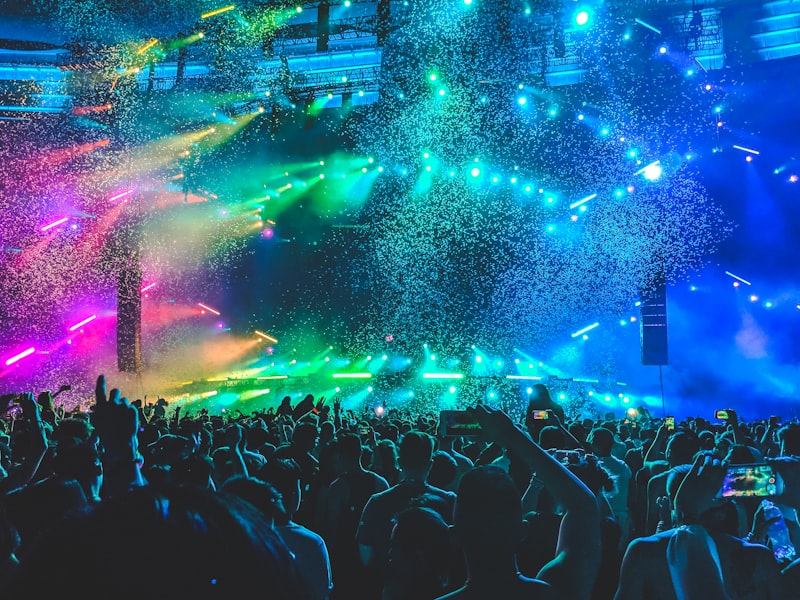
DJ booth environments routinely sustain 100-115 dB for 4-6 hours -- delivering 16-64x the recommended daily noise dose.
Headphone Monitoring Damage
While booth monitors contribute the ambient noise exposure, headphone monitoring may be even more dangerous on a per-exposure basis. DJs use headphones to preview ("cue") the next track before mixing it live. This requires listening to the cue track at a level loud enough to hear it clearly over the booth monitors and room noise.
The physics are unfavorable: to hear a cue track clearly, it needs to be at least 10-15 dB above the ambient noise level. If booth monitors are at 100 dB, the headphone cue needs to be 110-115 dB. This is delivered directly into the ear canal, typically through one cup pressed hard against one ear, at a distance of centimeters from the eardrum.
The consequences are measurable:
- Asymmetric hearing loss: DJs frequently develop worse hearing in their cueing ear (typically the left ear for right-handed DJs who cue with the left headphone cup). This asymmetric pattern is a diagnostic signature of DJ-specific hearing damage.
- High-frequency loss pattern: Headphone cueing tends to damage the 3-6 kHz range preferentially -- the frequency range most critical for speech intelligibility. DJs may notice difficulty understanding speech in noisy environments long before they notice changes in music perception.
- Tinnitus onset: Many DJs report that their tinnitus began in the cueing ear before affecting the other ear. The asymmetric onset pattern correlates with the one-ear cueing behavior.
If you are a DJ with tinnitus, Lushh's frequency matcher can identify your exact tinnitus pitch and generate notch therapy sessions to target it specifically.
Download Lushh -- Free →Cumulative Exposure: The DJ Career Problem
What makes the DJ profession particularly hazardous is the cumulative nature of noise exposure over a career. Consider a typical working DJ's annual exposure:
- Weekend gigs: 2 sets per weekend, 4 hours each, at 100-105 dB = 8 hours above safe limits per week
- Studio production: 3-4 hours daily headphone monitoring at 80-95 dB = additional 15-20 hours per week at moderate-to-high levels
- Festival season: 10-20 festival performances, often back-to-back days with 6+ hour exposure per day
- Soundchecks and DJ prep: Additional hours of moderate exposure
Over a 10-year career, this cumulative dose can produce the equivalent hearing damage of decades of industrial noise exposure. And unlike industrial workers, DJs typically begin their careers in their teens or early twenties, when the "bank account" of cochlear hair cells is at its maximum and the perceived invincibility is also at its maximum.
By the time most DJs notice subjective hearing changes -- difficulty with speech in noise, persistent tinnitus, hyperacusis (pain sensitivity to loud sounds) -- the damage is already extensive and irreversible.
Career Impact and Mental Health
The Tinnitus UK survey revealed that hearing damage has significant career and psychological consequences for music workers. Among DJs with tinnitus:
- 66% reported negative impact on work ability
- 53% experienced sleep difficulties
- 41% reported anxiety related to their hearing condition
- 28% had reduced their performance schedule due to hearing concerns
- 19% had considered leaving the music industry entirely
The anxiety and depression that often accompany tinnitus are amplified in DJs by the direct threat to their livelihood. A DJ's career depends on their ability to hear accurately. The fear that hearing is deteriorating creates anticipatory anxiety around every performance, which itself can worsen tinnitus perception through the stress-tinnitus feedback loop.
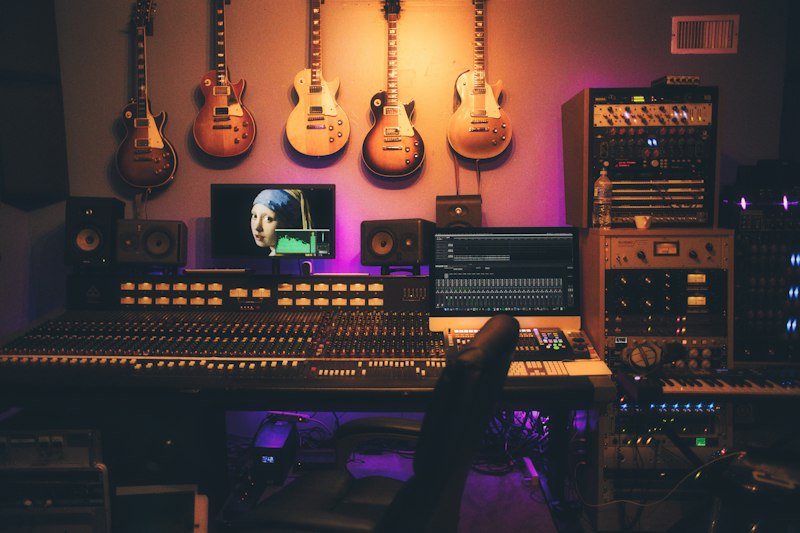
Transitioning to calibrated studio monitoring at safe levels is a critical career accommodation for DJs with hearing damage.
Accommodation Strategies
DJs who develop tinnitus or hearing loss can implement specific accommodations to continue working while protecting remaining hearing:
Booth Monitor Management
- Request booth level control: Ask promoters and venue sound engineers for a personal booth monitor volume control. Set it at soundcheck and mark the position physically.
- Use flat-attenuation earplugs: Custom or high-quality universal musician earplugs with 15-20 dB attenuation allow accurate monitoring at effectively 80-90 dB while the booth is at 100-105 dB.
- Position adjustment: If possible, position booth monitors further from your head or angled away from direct axis.
Headphone Cueing Alternatives
- Split cueing: Route cue audio to both ears at lower volume rather than one cup at high volume. This distributes exposure evenly.
- Visual beat matching: Use the waveform display on CDJs/software for visual alignment, reducing reliance on headphone cueing. Modern DJ software makes this increasingly practical.
- Pre-set cue points: Set cue points in advance during studio preparation, reducing the need for extended headphone cueing during live performance.
- Volume-limited headphones: Use headphones with built-in SPL limiters (several DJ headphone models now offer this feature).
Recovery Protocol
- Allow minimum 24-48 hours of quiet (below 75 dB) after every DJ set
- Avoid headphone use during recovery periods
- Use sound therapy (Lushh's therapeutic sounds →) during recovery
- Track tinnitus severity daily to identify patterns and trigger points
Studio Monitoring Best Practices
For DJs who also produce music, studio monitoring practices are equally important for long-term hearing health:
- Calibrate monitors: Use a measurement microphone (such as the Sonarworks Reference or IK Multimedia ARC) to calibrate your studio monitors to 83-85 dB SPL at your listening position. This provides a consistent reference that prevents volume creep.
- Follow the 60/60 rule for headphones: When using headphones for production, limit volume to 60% of maximum and take a break every 60 minutes.
- Use open-back headphones for mixing: Open-back headphones (Sennheiser HD600, Beyerdynamic DT 990) produce a more accurate sound image at lower SPL than closed-back headphones, reducing the temptation to crank volume.
- Reference at low volume: Do detailed EQ and balance decisions at 70-75 dB. Reserve louder monitoring for brief "excitement checks" only.
- Monitor your frequency bias: If your tinnitus is at a specific frequency, use a spectrum analyzer to check that you are not unconsciously compensating for it in your mixes.
Frequently Asked Questions
How loud is a typical DJ booth?
DJ booth levels typically range from 96-115 dB. In clubs with booth monitors close to the DJ, sustained levels of 100-110 dB are common over 4-6 hour sets. At 100 dB, safe exposure is only 15 minutes according to NIOSH standards.
Is headphone monitoring more dangerous than booth monitors?
Headphone monitoring carries unique risks because sound is delivered directly into the ear canal. DJs often press one cup to their ear at 110-120 dB to hear over booth monitors. This asymmetric exposure can cause unilateral hearing damage.
Can DJs mix effectively while wearing earplugs?
Yes. Many professional DJs perform with flat-attenuation musician earplugs (15-20 dB reduction). The flat attenuation preserves frequency balance needed for beatmatching and EQ decisions.
What should I do if I already have DJ-related tinnitus?
Get an audiological evaluation, implement hearing protection for all future sets, and start a tinnitus management program: frequency matching, sound therapy (notch therapy targets specific tinnitus frequencies), CBT for distress reduction, and daily tracking.
Manage DJ Tinnitus with Lushh
Lushh provides frequency matching (100-16,000 Hz), notch therapy, 65+ therapeutic sounds, CBT exercises, and daily tracking with exportable PDF reports for your audiologist.
Download Lushh -- FreeDisclaimer: This article is for informational purposes only and does not constitute medical advice. Always consult an audiologist or ENT specialist for professional hearing assessment and personalized treatment.