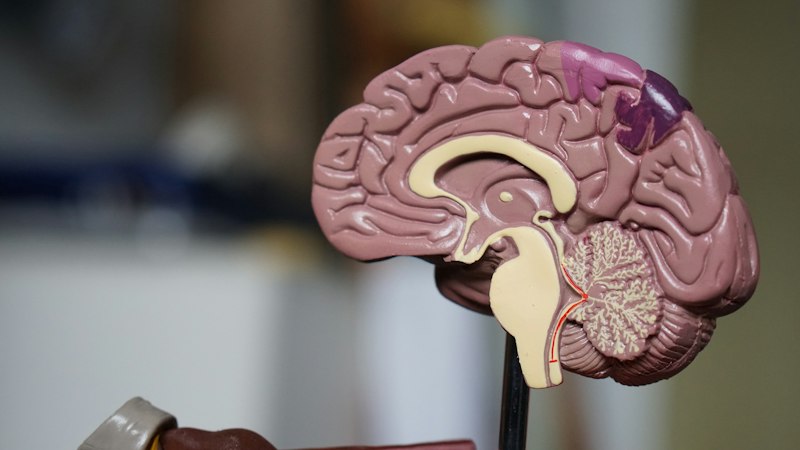
If you have tinnitus and find yourself struggling to concentrate, forgetting things, or feeling mentally exhausted by the end of the day, you are not imagining it. A growing body of neuroscience research confirms that tinnitus directly competes for the cognitive resources your brain uses for attention, working memory, and executive function.
The mechanism is not mysterious: your brain has finite attentional capacity. Tinnitus commandeers a portion of that capacity -- sometimes a small portion (mild tinnitus), sometimes a large portion (severe, distressing tinnitus). What remains available for reading, conversations, work, and problem-solving is reduced. This is the attention resource competition model, and it has significant implications for how tinnitus patients should approach both treatment and daily life.
Attention Resource Competition
The human brain processes information using a limited pool of attentional resources. Kahneman's capacity model of attention (1973) established that demanding tasks compete for the same finite resources. Tinnitus, as a persistent internal signal that the brain treats as potentially important, draws from this pool continuously.
A 2014 meta-analysis by Mohamad et al. in Neuropsychology Review analyzed 14 studies measuring cognitive function in tinnitus patients and found consistent deficits in sustained attention (the ability to maintain focus over time), selective attention (the ability to focus on one thing while ignoring distractions), and divided attention (the ability to process multiple information streams simultaneously).
Critically, the severity of cognitive impact correlates with tinnitus distress rather than tinnitus loudness. Patients who have habituated to their tinnitus -- who hear it but are not bothered by it -- show minimal cognitive effects. Patients with high distress show the greatest deficits. This supports the attention competition model: it is not the tinnitus signal itself that consumes resources, but the emotional and attentional engagement with it.
"Tinnitus does not directly damage cognitive function. It diverts attentional resources away from cognitive tasks through a mechanism of involuntary attention capture. Reducing tinnitus distress through psychological interventions restores cognitive resources without changing the tinnitus signal itself." -- Dr. Derek Hoare, University of Nottingham
Working Memory Impact
Working memory -- the ability to hold and manipulate information temporarily -- is particularly affected by tinnitus. This is the cognitive function you use when following a conversation, doing mental arithmetic, or remembering instructions while carrying them out.
Rossiter et al. (2006) in International Journal of Audiology found that tinnitus patients performed significantly worse on working memory tasks (n-back tests, digit span) compared to age-matched controls. The deficit was specifically in the central executive component of working memory -- the part that controls attention allocation -- rather than the phonological loop or visuospatial sketchpad.
This has practical implications: tinnitus patients may struggle more with tasks that require holding multiple pieces of information simultaneously (complex instructions, multi-step procedures) while having less difficulty with simple recall or recognition tasks.

Tinnitus consumes working memory resources, making complex tasks like following conversations in noise or processing multi-step instructions more demanding.
Concentration Difficulties
The most commonly reported cognitive complaint among tinnitus patients is difficulty concentrating. A 2018 survey by the BTA found that 82% of tinnitus patients reported concentration difficulties, with 34% describing them as "severe" or "very severe."
The concentration deficit is not constant -- it fluctuates with tinnitus salience. Quiet environments (where tinnitus is more noticeable) produce greater concentration difficulty than moderately noisy environments (where background sound partially masks the tinnitus). This is why many tinnitus patients work better with background music or in coffee shops than in silent offices -- the ambient sound reduces tinnitus salience and frees up attentional resources. Lushh's focus sounds can help during work →
Cognitive Fatigue
Perhaps the most underappreciated cognitive effect of tinnitus is cognitive fatigue -- the progressive depletion of mental resources over the course of a day. Because tinnitus continuously draws from the attentional resource pool, tinnitus patients start each task with a smaller "budget" of cognitive resources. By late afternoon, the cumulative depletion results in significantly impaired performance.
A 2019 study by Cardon et al. in Frontiers in Neuroscience used EEG to measure neural fatigue markers in tinnitus patients and controls during a sustained attention task. Tinnitus patients showed significantly faster onset of neural fatigue markers (reduced P300 amplitude, increased theta activity) and reported higher subjective fatigue at equivalent performance levels.
This has practical implications for work and daily planning: tinnitus patients should schedule cognitively demanding tasks for morning hours when resources are fullest, and build in more frequent rest breaks throughout the day.
Dual-Task Performance
Dual-task performance -- doing two things at once -- is where tinnitus cognitive effects are most pronounced. When you add tinnitus as an involuntary "third task," the system becomes overloaded more easily.
Stevens et al. (2007) found that tinnitus patients showed disproportionate performance degradation on dual-task paradigms compared to controls. The deficit was most apparent when one task involved auditory processing (e.g., listening to speech while performing a visual task), suggesting that tinnitus particularly competes with other auditory processing demands.
Practical examples: following a conversation while driving (auditory + visual-motor), taking notes during a meeting (auditory + writing), or listening to a podcast while cooking (auditory + procedural). Tinnitus patients may find these combinations more taxing than non-tinnitus individuals.
Reduce the cognitive load of your tinnitus with sound therapy that decreases its salience. Lushh's therapeutic sounds and notch therapy free up attentional resources for what matters.
Download Lushh -- Free →Compensatory Strategies
Understanding the attentional mechanism behind tinnitus cognitive effects enables targeted strategies:
- Sound enrichment during cognitive tasks: Low-level background sound (nature sounds, pink noise) reduces tinnitus salience, freeing attentional resources. This is one of the most immediately effective strategies.
- Task scheduling: Do demanding cognitive work in the morning. Reserve afternoons for routine tasks that require less concentration.
- Reduce multitasking: Single-task whenever possible. Close unnecessary browser tabs, turn off notifications, and focus on one thing at a time.
- Structured breaks: The Pomodoro technique (25 minutes focused work, 5 minutes rest) is particularly effective for tinnitus patients because it prevents the deep resource depletion that comes from extended concentration.
- External memory aids: Use written lists, calendar reminders, and note-taking apps to offload information from working memory. This compensates for the reduced working memory capacity without requiring more cognitive resources.
- Reduce tinnitus distress: Because cognitive impact correlates with distress rather than loudness, CBT and mindfulness that reduce emotional reactivity to tinnitus also improve cognitive function as a secondary benefit.
- Prioritize sleep: Sleep deprivation compounds tinnitus cognitive effects. See our guide on sleep hygiene for tinnitus.
Hearing Aid Cognitive Benefit
For tinnitus patients with coexisting hearing loss, hearing aids provide a dual cognitive benefit that is often underappreciated:
Reduced listening effort: Hearing loss forces the brain to dedicate extra resources to speech decoding. Hearing aids restore the auditory signal, reducing this "listening effort" and freeing resources for comprehension and higher-level cognitive processing. Hornsby (2013) in Journal of the American Academy of Audiology demonstrated that hearing aid use significantly reduced cognitive load during speech perception tasks.
Tinnitus reduction: Many modern hearing aids include tinnitus sound therapy features (built-in noise generators, notch therapy). Even without specific tinnitus features, the increased ambient sound provided by hearing aid amplification reduces tinnitus salience throughout the day.
A landmark 2020 study by Saito et al. in Ear and Hearing found that 6 months of consistent hearing aid use improved both speech-in-noise performance and standardized cognitive test scores in tinnitus patients with mild-to-moderate hearing loss. The cognitive improvements were proportional to the reduction in self-reported tinnitus distress.
The 2020 Lancet Commission on Dementia identified hearing loss as the single largest modifiable risk factor for dementia, accounting for 8.2% of attributable cases. For tinnitus patients with hearing loss, hearing aids are not just a comfort measure -- they are a cognitive protection strategy.

Hearing aids provide dual cognitive benefit for tinnitus patients: reducing listening effort and decreasing tinnitus salience, both of which free attentional resources.
For more on the hearing-tinnitus relationship, see our guide on tinnitus and hearing loss. And for understanding your hearing profile, read understanding your hearing test results.
Frequently Asked Questions
Does tinnitus actually affect cognitive function?
Yes. Multiple studies confirm tinnitus consumes attentional resources, reducing performance on tasks requiring sustained attention, working memory, and processing speed. The effect is proportional to tinnitus distress -- more bothersome tinnitus creates greater cognitive load.
Is tinnitus-related brain fog the same as cognitive decline?
No. Tinnitus-related cognitive difficulties are caused by attentional resource competition, not structural brain damage. When tinnitus is managed through sound therapy, habituation, or hearing aids, cognitive performance typically returns to normal. However, untreated hearing loss associated with tinnitus is an independent risk factor for cognitive decline.
Can hearing aids help with tinnitus-related cognitive problems?
Yes. For tinnitus patients with hearing loss, hearing aids reduce listening effort and tinnitus salience, freeing cognitive resources. A 2020 study found that hearing aid use improved both speech-in-noise performance and cognitive test scores in tinnitus patients with mild-to-moderate hearing loss.
Free Up Your Cognitive Resources
Lushh reduces tinnitus salience through sound therapy, notch filtering, and 65+ therapeutic sounds -- freeing the attentional resources your brain needs for focus, memory, and daily life.
Download Lushh -- FreeDisclaimer: This article is for informational purposes only and does not constitute medical advice. If you are experiencing significant cognitive difficulties, consult a healthcare provider to rule out other causes.