
Motion sickness is one of the most common human experiences — and one of the most poorly understood by those who suffer from it. The nausea you feel reading in a car, the queasiness on a boat, the disorientation in a VR headset: all of these originate from the same system that keeps you balanced, oriented, and upright. Your vestibular system — a remarkably sophisticated sensory apparatus housed in each inner ear — is at the center of all motion sickness.
Understanding how this system works, why it produces nausea, and what emerging research reveals about modulating its signals is essential for anyone who experiences motion sickness regularly. It also connects directly to vertigo and tinnitus — conditions that share the same anatomical real estate and often overlap.
Sensory Conflict Theory: The Leading Explanation
The dominant scientific explanation for motion sickness is the sensory conflict theory, first formalized by Reason and Brand in 1975 and refined extensively since. The theory proposes that motion sickness occurs when the brain receives conflicting information from its three spatial orientation systems:
- Vestibular system (inner ear): Detects angular rotation (via semicircular canals) and linear acceleration/gravity (via otolith organs — utricle and saccule)
- Visual system (eyes): Detects motion through optic flow — the movement of the visual scene across the retina
- Somatosensory system (body): Detects body position, pressure, and vibration through proprioceptors in muscles, joints, and skin
When these three systems agree — as they do during normal walking, running, or even riding a bicycle — no conflict exists and no nausea occurs. Motion sickness arises when inputs diverge from what the brain expects based on prior experience.
Classic example — reading in a car: Your vestibular system detects acceleration, turning, and road undulation. Your somatosensory system confirms these movements through pressure changes in your seat. But your eyes, focused on a stationary book, detect no motion. This three-way conflict — vestibular says "moving," somatosensory says "moving," visual says "stationary" — triggers the nausea response.
Why nausea? The leading hypothesis is evolutionary: the only natural circumstance where your senses strongly disagree about movement is ingestion of a neurotoxin. Historically, the safest response to sensory-motor mismatch was to vomit. Your brain is, essentially, protecting you from perceived poisoning — just at the wrong time.

The vestibular system detects both rotation (semicircular canals) and linear acceleration (otolith organs) — sending signals that must match visual and body position inputs.
The Vestibular-Ocular Reflex: Your Built-In Stabilizer
The vestibular-ocular reflex (VOR) is one of the fastest reflexes in the human body — responding in approximately 10 milliseconds. When your head moves, the VOR generates an equal and opposite eye movement to keep your visual field stable. Turn your head right, and your eyes automatically rotate left by the same angle, keeping the image on your retina sharp.
The VOR is critical to understanding motion sickness because disruption of this reflex directly produces nausea. When the VOR cannot adequately compensate — because the motion is too complex, too prolonged, or because the visual environment does not match expected movement patterns — the brain receives conflicting vestibular and visual signals.
This is why looking out the window in a car reduces motion sickness: it provides your visual system with optic flow that matches what your vestibular system detects, resolving the conflict. It is also why people with vestibular disorders (including those with vertigo or tinnitus from inner ear damage) often have heightened motion sickness — their VOR is already compromised, making any additional sensory conflict intolerable.
Why Some People Are More Susceptible
Motion sickness susceptibility varies enormously between individuals — from people who can read on roller coasters to those who feel queasy in a slowly moving elevator. Research has identified several factors that determine where you fall on this spectrum.
Vestibular sensitivity: People with more sensitive vestibular organs detect smaller movements with greater precision — which paradoxically makes them more susceptible to motion sickness. Their brains have stricter expectations about sensory matching, and smaller discrepancies trigger conflict.
Age: Motion sickness susceptibility peaks between ages 9 and 12, then gradually declines. Infants under 2 are essentially immune (their vestibular systems are not yet fully integrated with visual processing). Elderly adults have reduced susceptibility — partly from vestibular decline and partly from decades of habituation.
Sex: Women are approximately 2-3 times more susceptible than men, particularly during menstruation and pregnancy. Estrogen appears to modulate vestibular sensitivity and the central processing of sensory conflict signals.
Genetics: Twin studies have estimated motion sickness heritability at 57-70%, making it one of the more heritable common traits. Specific genetic variants affecting vestibular receptor density and serotonin metabolism have been implicated.
Vestibular disorders: People with vestibular conditions — including BPPV, Meniere's disease, vestibular migraine, and vestibular neuritis — almost universally report heightened motion sickness. The baseline vestibular dysfunction lowers the threshold for sensory conflict.
Lushh includes vestibular tracking and management tools — download free →Car, Boat, and VR Sickness: Same Mechanism, Different Triggers
Car Sickness
The most common form. The conflict is typically vestibular-visual: your inner ear detects motion while your eyes (focused on a phone, book, or the car interior) detect none. Sitting in the front seat reduces car sickness because you see the road ahead, providing visual optic flow that matches vestibular input. Back seat passengers, especially children, have limited forward visual reference.
Seasickness
On a boat, the conflict is more complex. Below deck, the situation is like car sickness — vestibular motion without visual confirmation. On deck, a different conflict arises: the visual horizon moves (waves, swaying), the vestibular system detects complex multi-axis motion, and the somatosensory system reports an unstable surface. The constant, rhythmic, low-frequency motion of ocean swells (0.1-0.5 Hz) is particularly provocative because it matches the vestibular system's peak sensitivity range.
VR Sickness (Cybersickness)
VR sickness is the mirror image of car sickness. In a car, you move without seeing it. In VR, you see movement without feeling it. Your eyes detect rich optic flow — walking through environments, flying, roller coasters — while your vestibular system reports that you are stationary. Additionally, any latency between head movement and display update (even 20 milliseconds) produces a VOR mismatch that is intensely nauseating.
Modern VR headsets have reduced motion-to-photon latency to under 20ms, which has improved the experience dramatically. However, locomotion in VR (moving through a virtual space while physically stationary) remains deeply provocative for most users. Solutions being researched include galvanic vestibular stimulation (GVS) to create artificial vestibular inputs matching visual motion.
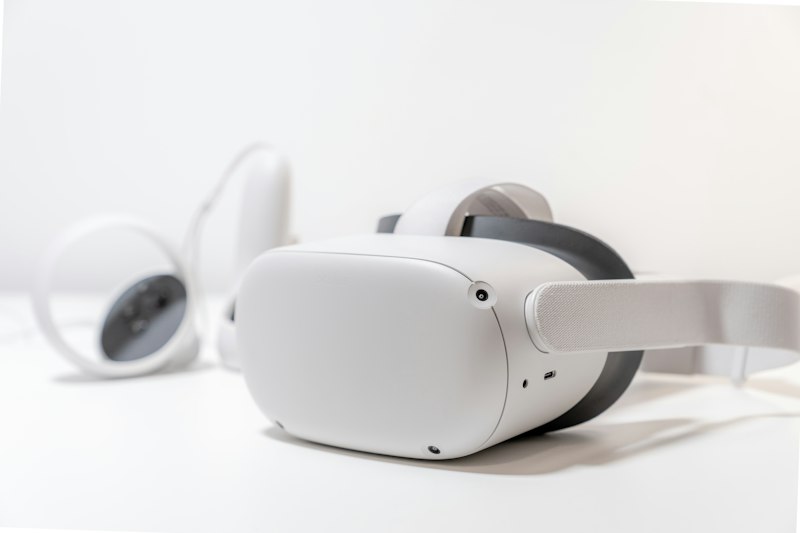
VR sickness reverses the typical motion sickness pattern — your eyes see motion while your vestibular system detects none, creating an inverted sensory conflict.
The Nagoya University 100Hz Research
One of the most intriguing recent developments in motion sickness research comes from Nagoya University in Japan, where researchers have investigated the effect of bone-conducted vibration at approximately 100Hz on vestibular function and motion sickness.
The research builds on the observation that low-frequency vibration delivered to the skull can modulate vestibular nerve activity. At approximately 100Hz, vibration appears to stimulate the otolith organs (saccule and utricle) in a way that stabilizes vestibular output, reducing the magnitude of sensory conflict signals that trigger motion sickness.
In controlled experiments, subjects exposed to a nauseating visual stimulus (optokinetic stimulation) while receiving 100Hz bone-conducted vibration reported significantly lower motion sickness scores compared to control conditions. The vibration did not eliminate vestibular function — subjects could still detect real movement — but it appeared to "dampen" the vestibular system's response to conflicting sensory inputs.
"Bone-conducted vibration at 100Hz showed a stabilizing effect on vestibular-mediated postural responses and reduced subjective motion sickness severity by 30-40% in our experimental paradigm." — Nagoya University Department of Otorhinolaryngology, 2022
This research is still in its early stages, and commercial applications are limited. However, it opens a promising avenue for non-pharmacological motion sickness prevention — particularly relevant for VR applications, military vehicle operations, and anyone with heightened vestibular sensitivity. The principle of using controlled vestibular stimulation to reduce unwanted vestibular responses connects directly to vestibular rehabilitation approaches used for vertigo management.
Habituation: Training Your Vestibular System
The most reliable long-term solution to motion sickness is habituation — repeated exposure that gradually recalibrates the brain's expectations about sensory matching. Sailors rarely get seasick after a few days at sea. Pilots overcome motion sickness during flight training. Astronauts adapt to microgravity within days.
Habituation works through vestibular neuroplasticity: the brain literally rewrites its sensory conflict detection thresholds based on experience. Key principles for effective habituation:
- Gradual exposure: Start with short exposures and increase duration as tolerance builds. Stop before nausea becomes severe — repeated vomiting does not accelerate habituation.
- Consistent practice: Daily or every-other-day exposure is more effective than weekly sessions. The brain consolidates vestibular learning during sleep.
- Specific training: Habituation is somewhat motion-specific. Training in a car does not fully transfer to boats. Train in the specific environment you want to tolerate.
- Active movement: Active control of movement (driving vs. passenger) accelerates habituation because the brain can predict upcoming sensory changes.
Track your vestibular symptoms alongside tinnitus with Lushh. Log vertigo episodes, motion sickness triggers, and recovery patterns to understand your vestibular health over time.
Download Lushh — Free →Evidence-Based Management Strategies
While habituation is the long-term goal, immediate relief strategies are essential for managing motion sickness when it strikes.
Visual fixation: Look at the horizon or a distant stable point. This provides visual optic flow matching vestibular input and is consistently the most effective non-pharmacological intervention. In a car, look out the front windshield. On a boat, watch the horizon. In VR, reduce virtual movement speed and use teleportation locomotion.
Fresh air and cooling: Cool air on the face activates trigeminal nerve pathways that suppress nausea. Open a window, use a fan, or apply a cool cloth to the forehead. The mechanism involves vagal modulation and is surprisingly effective.
Controlled breathing: Slow, deep diaphragmatic breathing (4-second inhale, 6-second exhale) reduces sympathetic activation and nausea. A 2019 study in Aerospace Medicine and Human Performance found that controlled breathing reduced motion sickness severity by 40% in a simulated environment.
Pharmacological options: Scopolamine (transdermal patch) is the most effective pharmaceutical prevention. Antihistamines (dimenhydrinate/Dramamine, meclizine) are available over-the-counter. Both cause drowsiness. Ginger (250mg capsules every 6 hours) has shown modest benefit in controlled trials with fewer side effects.
Acupressure: Pressure on the P6 (Nei Guan) point on the inner wrist has mixed evidence. Some controlled trials show benefit; others do not. Sea-Bands and similar wristbands exploit this point. Even if the mechanism is partially placebo, the absence of side effects makes it worth trying.
For those with concurrent tinnitus and motion sickness — both vestibular-related conditions — managing one often helps the other. Stress reduction benefits both systems, and improved sleep supports vestibular compensation and habituation.
Frequently Asked Questions
Why do some people get motion sick and others don't?
Susceptibility depends on vestibular system sensitivity, how strictly your brain requires sensory inputs to match, genetic factors, and experience (habituation). Women are more susceptible than men, and susceptibility peaks around age 9-12 before declining in adulthood.
What is the sensory conflict theory of motion sickness?
Sensory conflict theory proposes that motion sickness occurs when the brain receives conflicting information from the vestibular system, visual system, and somatosensory system. For example, reading in a car: your vestibular system detects motion but your eyes see a stationary page. This mismatch triggers nausea as a protective response.
How does the 100Hz vibration research relate to motion sickness?
Researchers at Nagoya University found that bone-conducted vibration at approximately 100Hz can modulate vestibular processing and reduce motion sickness symptoms by 30-40%. The vibration stabilizes vestibular signals, reducing sensory conflict. This is still emerging research but represents a novel non-pharmacological approach.
Why is VR sickness different from car sickness?
VR sickness is the reverse of car sickness. In a car, your vestibular system detects motion but your eyes see a stationary interior. In VR, your eyes see motion but your vestibular system detects no movement. Both produce sensory conflict through opposite mechanisms.
Manage Vestibular Symptoms with Lushh
Lushh tracks vertigo, motion sickness, and tinnitus together — helping you understand the vestibular connections. Plus sound therapy, CBT exercises, and daily tracking tools.
Download Lushh — FreeDisclaimer: This article is for informational purposes only and does not constitute medical advice. If you experience persistent vertigo, motion sickness, or dizziness, consult your healthcare provider for proper diagnosis and treatment.